Here’s what I imagine:
- Personal and artistic identity will matter more and more. What makes the difference won't just be your background, but your presence, what you create and what makes you unique.
- Online casting will keep growing. With audition videos and social media, some in-person auditions are already being replaced by an initial selection online.
- New collaborations will emerge through social media. These days, you can discover an artist on Instagram, get talking and end up working together without ever having met in person.
- Nobody will want an A4 sheet crammed with your 150 past jobs. They'll want to see what you can do, discover your artistic world and, above all, feel something.
- The way you express yourself online will make a difference too. Copywriting, storytelling and the way you share your background and experiences, in your own words rather than just those of ChatGPT or Gemini, could help you stand out.
- New digital spaces designed for artists will emerge. Especially with AI and the development of new apps. I've actually got a little idea of my own, but that might be more of a five-to-seven-year project!
Listen
Things are already moving fast, and over the next few years they'll move even faster.
And I think about everyone who isn't getting on board today because they're waiting for the ‘next’ opportunity, resting on their laurels.
Except that next opportunity might not come as quickly as they think, especially in an already crowded market.
What recruiters will really be looking at
Casting directors, programmers and producers already do more than read a CV.
They might also look at your Instagram, your website, your videos, the projects you've been part of or the artists you've worked with.
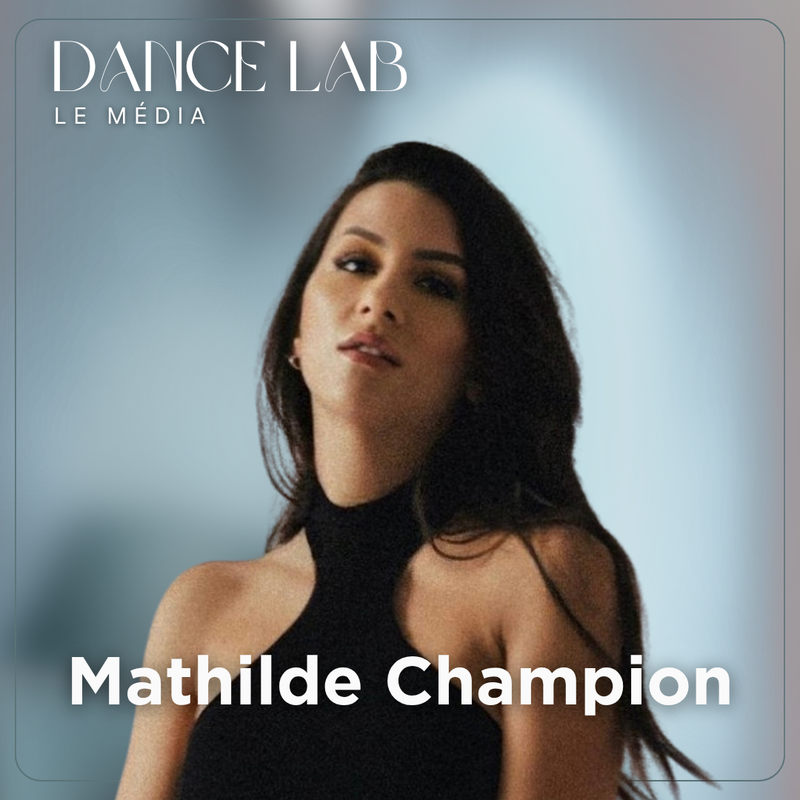
In an episode of Dance Lab, Mathilde Champion explains how social media can help artists get noticed and create opportunities. She also discusses finding talent through social media.
And that says a lot about how things are changing.
Because a CV saying you can dance several styles isn't quite the same as a video where we can actually see you doing them.
That doesn't mean your experience or training has lost its value. Quite the opposite. But today, we can also show what we can do in practical terms.
And I think that's going to matter more and more.
What if every artist had their own digital space?
Today, we're juggling Instagram, TikTok, YouTube, showreels, photos, CVs and sometimes our own website too.
So why not imagine a space that brings it all together?
An interactive portfolio you could update as you gain experience, with your videos, projects, collaborations and news.
Recruiters, meanwhile, could use AI to find artists using much more specific criteria: a technique, a style, a particular skill or even an artistic world.
Of course, this is still a prediction. But when you see how quickly the tools are evolving, I don't think the idea is that far-fetched.
So what do we do now?
I think we'll need to learn to look at our online presence differently.
That doesn't have to mean posting every day, sharing your whole life or becoming a full-time content creator.
But at least thinking about how we present our work, share our experiences and make it possible for others to discover us.
And I also think schools and artistic training programmes have a part to play.
We're taught to develop our technique, interpretation and creativity. But are we taught enough about communicating our work, building a portfolio or understanding digital tools?
Because you can be an excellent artist and still struggle to get noticed.
And, conversely, being very active on social media is absolutely no guarantee of being a good artist.
We need to find our own balance, without forgetting that what matters most is what we actually do on stage, in the studio or in front of a camera.
So, if you want to stand out and avoid being left behind in 2030, start showing what you do now, not just saying what you can do.

Join the conversation
When it comes to landing a project, what has made the difference for you: your CV, your videos or the people you’ve met?